

Historic downtown Oroville is the city’s historic commercial core, surrounded by residential neighborhoods with Victorian homes and bungalows. You can combine a walk among historic buildings and public art with a visit to the Oroville Chinese Temple and downtown museums.
- From the hotel: The walk from this Oroville inn to the city centre takes about 18 minutes on foot.
- Downtown character: Tree-lined streets, historic buildings, museums, eateries, and boutiques.
- Getting oriented: The City of Oroville offers a walking-tour brochure and an audio tour by phone.
- Parking: On-street and off-street parking is free throughout downtown.
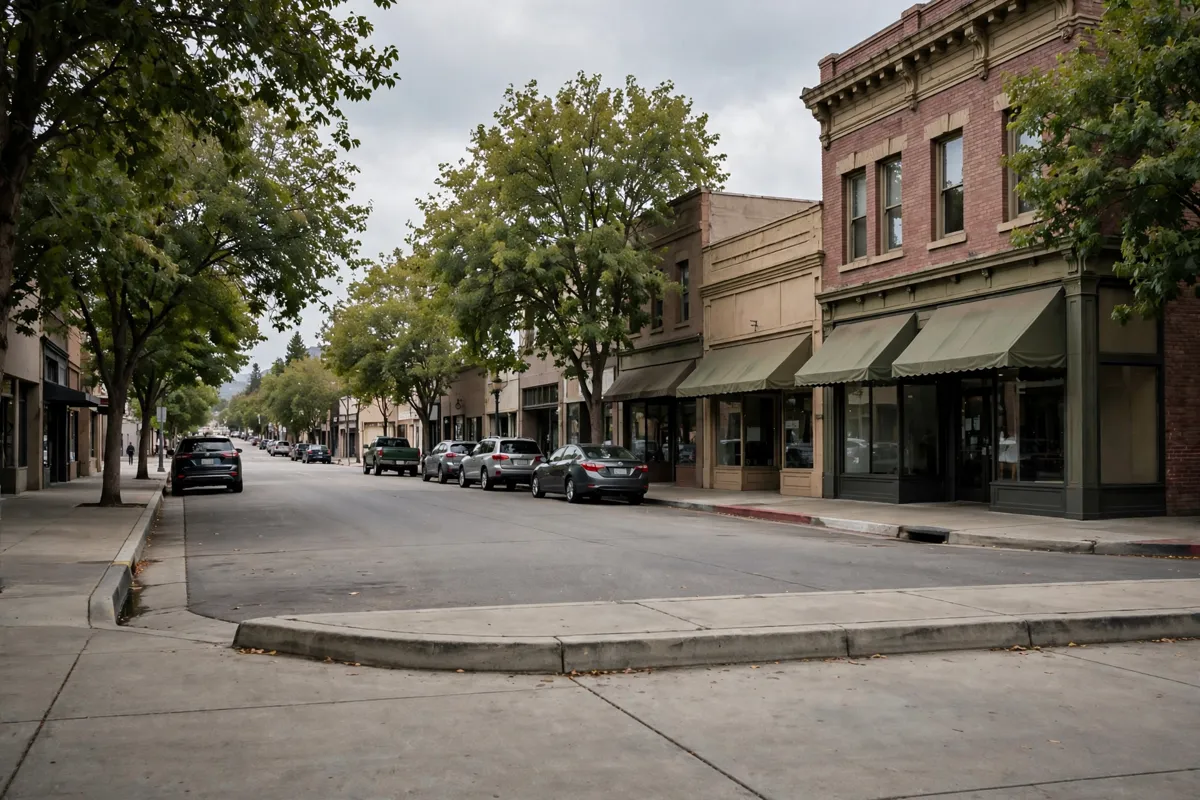
Starting a downtown walk
A downtown walk is easiest to shape around the City of Oroville’s brochure or phone audio tour. The district is a historic commercial core alongside residential streets, with old buildings, tree-lined roads, Victorian homes, bungalows, and museums.
The audio tour covers the Lott family, the Chinese Temple, and other local-history stops. To use it, call 530-539-3004 and press the number for the stop you are visiting. That gives you a way to connect the streets and buildings with local stories as you walk.
Five museums sit within a mile of one another in downtown Oroville. You can use the tour to help choose which stops to include, then leave time for the temple and the public art along Montgomery Street.
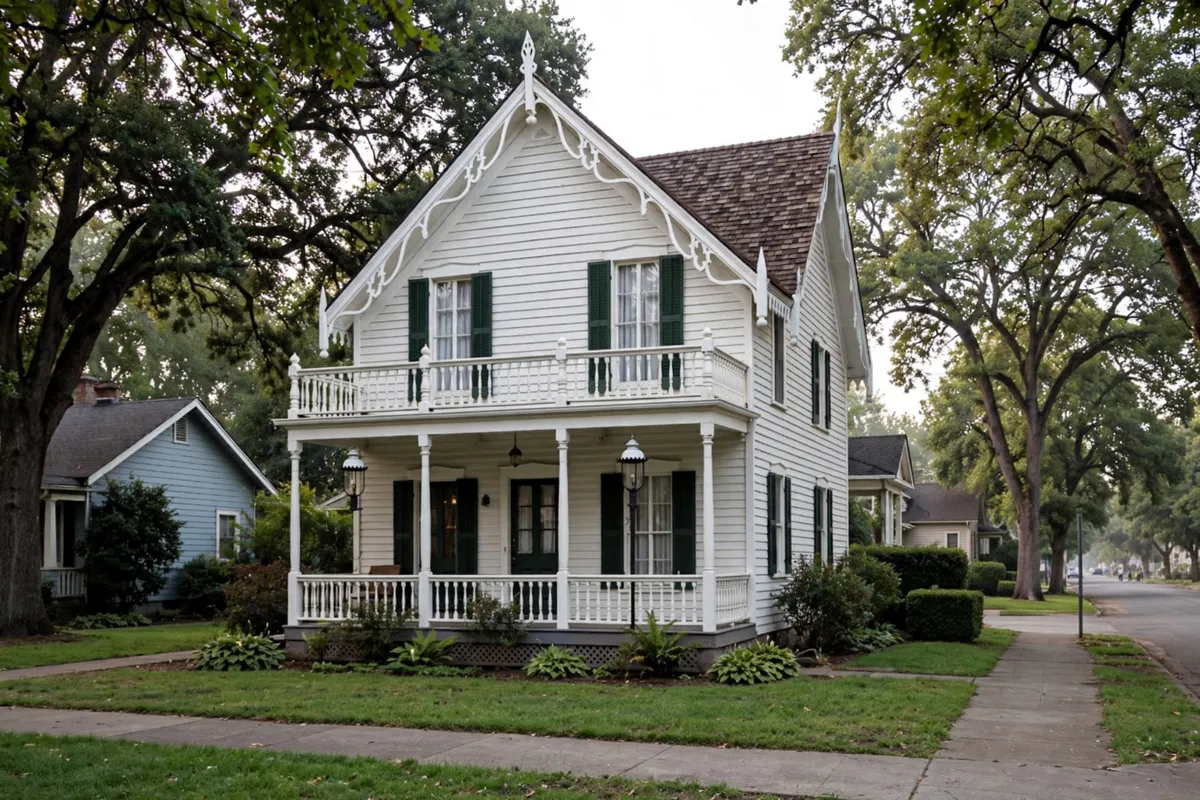
Historic streets and buildings
Montgomery Street is downtown Oroville’s main street, and the Old Oroville Commercial District includes historic commercial buildings dating from 1856 to 1912. The district contains 16 landmark structures, making its streetscape a central part of a walking route.
Among the downtown structures listed on the National Register are the State Theatre, the Governor Perkins Building at 1864 Montgomery Street, and the Gardella Reece Building at 1877 Montgomery Street. The C.F. Lott Home offers a different kind of historic stop: the Victorian Gothic Revival house was built in 1856 and now operates as a historic house museum.
The Lott Home usually opens on weekends from October through June, 11:30 a.m.–3:30 p.m.. Museum schedules can vary with volunteer availability, and museums close on federal holidays. Check the official site before you go.
Prices and times checked November 2026.
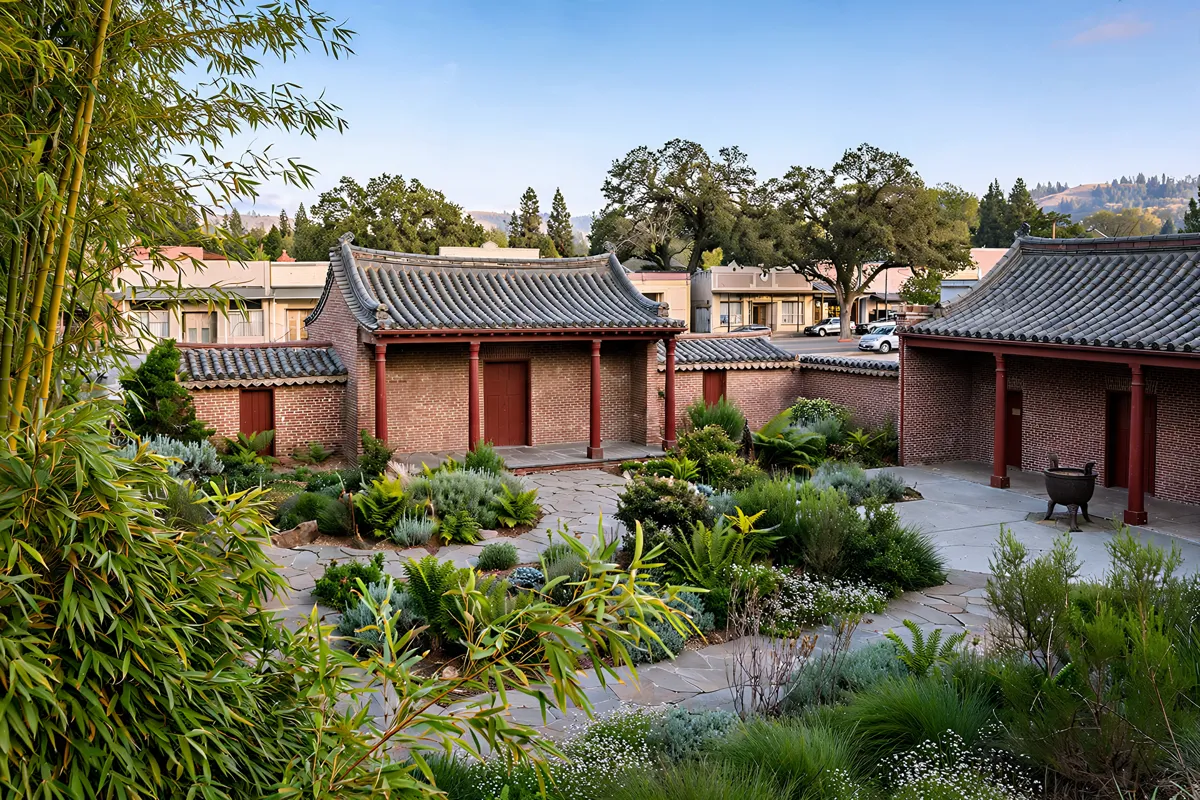
Oroville Chinese Temple
The Oroville Chinese Temple is a city-operated historic site at 1500 Broderick Street. Dedicated in spring 1863, it served 10,000 Chinese residents and was deeded to the city in 1935.
The temple was built in 1873 and first opened to the public during Oroville’s 1949 Centennial. The complex includes the main Liet Sheng Kong temple, Confucian and Buddhist temples, and Tapestry Hall, added in 1968. Its garden has bamboo planted in the 1860s, lily pads, and a pomelo tree that fruits during Chinese New Year.
The temple’s usual season runs from February through December, with weekend hours of 11:00 a.m.–3:00 p.m.. Other openings depend on volunteer availability. Admission is cash only: $4 for adults, $3 for seniors, and free for children under 12. The annual Chinese New Year celebration at the temple includes a traditional Lion Dance by San Francisco’s White Crane Dancers.
For more on the site’s background and visit details, use this guide to visiting the Oroville Chinese Temple.
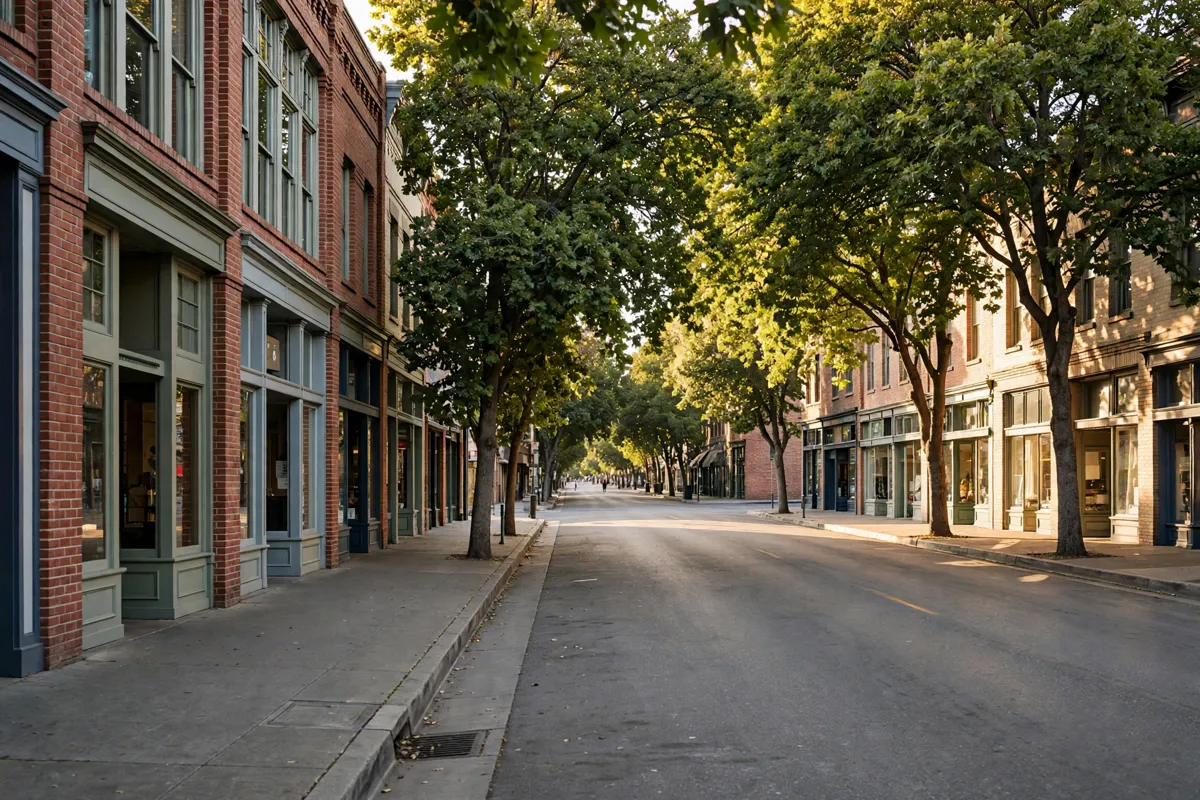
Public art and local history
Downtown murals add public-art stops to a walk along Montgomery Street. Murals can be found at City Hall, at Montgomery and Lincoln, at Montgomery and Downer, and at 1267 Montgomery Street.
The City of Oroville also documents the Oroville Railyard artwork on Lincoln Street. You can combine the downtown murals and this artwork with the older commercial buildings for a route that links local history with public art.
Downtown is a walkable neighborhood with a riverfront trail, eateries, boutiques, and special events. If you want to extend your walk beyond the historic blocks, these are among the district’s other features.
Walking and parking downtown
Free on-street and off-street parking is available throughout downtown, and a parking brochure can help you choose where to leave the car before setting off on foot.
For a walk built around museums, check their schedules before planning the day: museums may close during normal hours when volunteers are unavailable and are closed on federal holidays. The temple and the Pioneer History Museum usually open on weekends from February through December; their typical hours are 11:00 a.m.–3:00 p.m. and 11:15 a.m.–3:15 p.m., respectively.
Volunteer-related closures are possible at the Chinese Temple. Confirm current opening details with the City of Oroville before setting out, particularly if a museum or the temple is the main reason for your visit.
Building a short visit around downtown
For a compact visit, start with the walking-tour brochure or phone audio, then follow the historic streets toward a museum or the Chinese Temple. The tour’s local-history stops include the Lott family and the temple, so it can help tie the route together without treating each site as a separate outing.
If you have time for a longer day, add the downtown murals and the riverfront trail, then take a break at one of the district’s eateries or boutiques. The city’s five museums are within a mile of one another, so you can choose stops based on which ones are open during your visit.
A broader plan for the city’s sights is covered in this one-day Oroville itinerary.
FAQs
What is historic downtown Oroville known for?
It is Oroville’s historic commercial core, with old buildings, tree-lined streets, Victorian homes, bungalows, museums, and public art.
How do you use the downtown walking-tour audio?
Call 530-539-3004 and press the number for the stop you are visiting. The audio covers the Lott family, the Chinese Temple, and other local-history stops.
Is parking free in downtown Oroville?
Yes. On-street and off-street parking is free throughout downtown, and a parking brochure is available.
When is the Oroville Chinese Temple usually open?
Its usual season is February through December, with weekend hours of 11:00 a.m.–3:00 p.m.. Other openings depend on volunteer availability, so check with the City of Oroville before your visit.